
Startup finance resources – practical frameworks for founders and finance leads.
Startup finance resources – practical frameworks for founders and finance leads.
Frameworks, data, and analysis for startup founders and finance leads. Written by people who have done this.
Frameworks, data, and analysis for startup founders and finance leads. Written by people who have done this.



Frequently asked questions about startup finance
Find quick answers to common questions about using Visibo for financial clarity.
Frequently asked questions about startup finance
Find quick answers to common questions about using Visibo for financial clarity.
How do I calculate startup runway?

Divide your current cash balance by your monthly net burn. If you have €500,000 in the bank and your net burn is €40,000/month, your runway is 12.5 months. The mistake most founders make is using gross burn instead of net burn, which makes runway look shorter than it actually is.
What is the difference between gross burn and net burn?
Gross burn is everything you spend each month — salaries, software, office, AWS. Net burn is gross burn minus any revenue coming in. If you spend €80,000/month but bring in €25,000 in revenue, your net burn is €55,000. Runway is always calculated on net burn. Investors may ask for gross burn as well.
What financial metrics do Series A investors expect?
The core metrics every Series A investor will ask for: net burn, runway, MRR and MRR growth rate, gross margin, CAC (customer acquisition cost), LTV (lifetime value), and headcount as a percentage of revenue. You should be able to answer all of these in under two minutes without opening a spreadsheet.
What is burn rate and why does it matter?
Burn rate is how much cash your startup spends each month. It matters because it directly determines your runway — how long you can operate before running out of money. Investors ask for it in every meeting. Most founders track gross burn (total spend) but should be tracking net burn (spend minus revenue) — that's the number that actually tells you how much time you have.
How often should I update my startup financials?
Your core metrics — cash balance, burn rate, runway — should reflect reality at all times, not be updated monthly when someone remembers to touch the spreadsheet. Model assumptions and forecasts should be reviewed quarterly or after any significant business event like a new funding round or major hire.
When should a startup hire a CFO or Head of Finance?
Most startups don't need a full-time finance hire until Series A or when monthly revenue exceeds €100,000. Before that, the priority is getting clean, automated financial data — so when you do hire, they spend time on strategy rather than rebuilding spreadsheets from scratch.
What should a startup board pack include?
A good board pack covers: cash position and runway, burn rate vs last month, revenue and key growth metrics, headcount and hiring plan, top risks and how you're managing them, and what you need from the board. Most investors want the financial section to take under 5 minutes to read — clear numbers, minimal narrative, no surprises.
How do I calculate startup runway?
Divide your current cash balance by your monthly net burn. If you have €500,000 in the bank and your net burn is €40,000/month, your runway is 12.5 months. The mistake most founders make is using gross burn instead of net burn, which makes runway look shorter than it actually is.
What is the difference between gross burn and net burn?
Gross burn is everything you spend each month — salaries, software, office, AWS. Net burn is gross burn minus any revenue coming in. If you spend €80,000/month but bring in €25,000 in revenue, your net burn is €55,000. Runway is always calculated on net burn. Investors may ask for gross burn as well.
What financial metrics do Series A investors expect?
The core metrics every Series A investor will ask for: net burn, runway, MRR and MRR growth rate, gross margin, CAC (customer acquisition cost), LTV (lifetime value), and headcount as a percentage of revenue. You should be able to answer all of these in under two minutes without opening a spreadsheet.
What is burn rate and why does it matter?
Burn rate is how much cash your startup spends each month. It matters because it directly determines your runway — how long you can operate before running out of money. Investors ask for it in every meeting. Most founders track gross burn (total spend) but should be tracking net burn (spend minus revenue) — that's the number that actually tells you how much time you have.
How often should I update my startup financials?
Your core metrics — cash balance, burn rate, runway — should reflect reality at all times, not be updated monthly when someone remembers to touch the spreadsheet. Model assumptions and forecasts should be reviewed quarterly or after any significant business event like a new funding round or major hire.
When should a startup hire a CFO or Head of Finance?
Most startups don't need a full-time finance hire until Series A or when monthly revenue exceeds €100,000. Before that, the priority is getting clean, automated financial data — so when you do hire, they spend time on strategy rather than rebuilding spreadsheets from scratch.
What should a startup board pack include?
A good board pack covers: cash position and runway, burn rate vs last month, revenue and key growth metrics, headcount and hiring plan, top risks and how you're managing them, and what you need from the board. Most investors want the financial section to take under 5 minutes to read — clear numbers, minimal narrative, no surprises.
How do I calculate startup runway?
Divide your current cash balance by your monthly net burn. If you have €500,000 in the bank and your net burn is €40,000/month, your runway is 12.5 months. The mistake most founders make is using gross burn instead of net burn, which makes runway look shorter than it actually is.
What is the difference between gross burn and net burn?
Gross burn is everything you spend each month — salaries, software, office, AWS. Net burn is gross burn minus any revenue coming in. If you spend €80,000/month but bring in €25,000 in revenue, your net burn is €55,000. Runway is always calculated on net burn. Investors may ask for gross burn as well.
What financial metrics do Series A investors expect?
The core metrics every Series A investor will ask for: net burn, runway, MRR and MRR growth rate, gross margin, CAC (customer acquisition cost), LTV (lifetime value), and headcount as a percentage of revenue. You should be able to answer all of these in under two minutes without opening a spreadsheet.
What is burn rate and why does it matter?
Burn rate is how much cash your startup spends each month. It matters because it directly determines your runway — how long you can operate before running out of money. Investors ask for it in every meeting. Most founders track gross burn (total spend) but should be tracking net burn (spend minus revenue) — that's the number that actually tells you how much time you have.
How often should I update my startup financials?
Your core metrics — cash balance, burn rate, runway — should reflect reality at all times, not be updated monthly when someone remembers to touch the spreadsheet. Model assumptions and forecasts should be reviewed quarterly or after any significant business event like a new funding round or major hire.
When should a startup hire a CFO or Head of Finance?
Most startups don't need a full-time finance hire until Series A or when monthly revenue exceeds €100,000. Before that, the priority is getting clean, automated financial data — so when you do hire, they spend time on strategy rather than rebuilding spreadsheets from scratch.
What should a startup board pack include?
A good board pack covers: cash position and runway, burn rate vs last month, revenue and key growth metrics, headcount and hiring plan, top risks and how you're managing them, and what you need from the board. Most investors want the financial section to take under 5 minutes to read — clear numbers, minimal narrative, no surprises.
Stop managing your startup in a spreadsheet
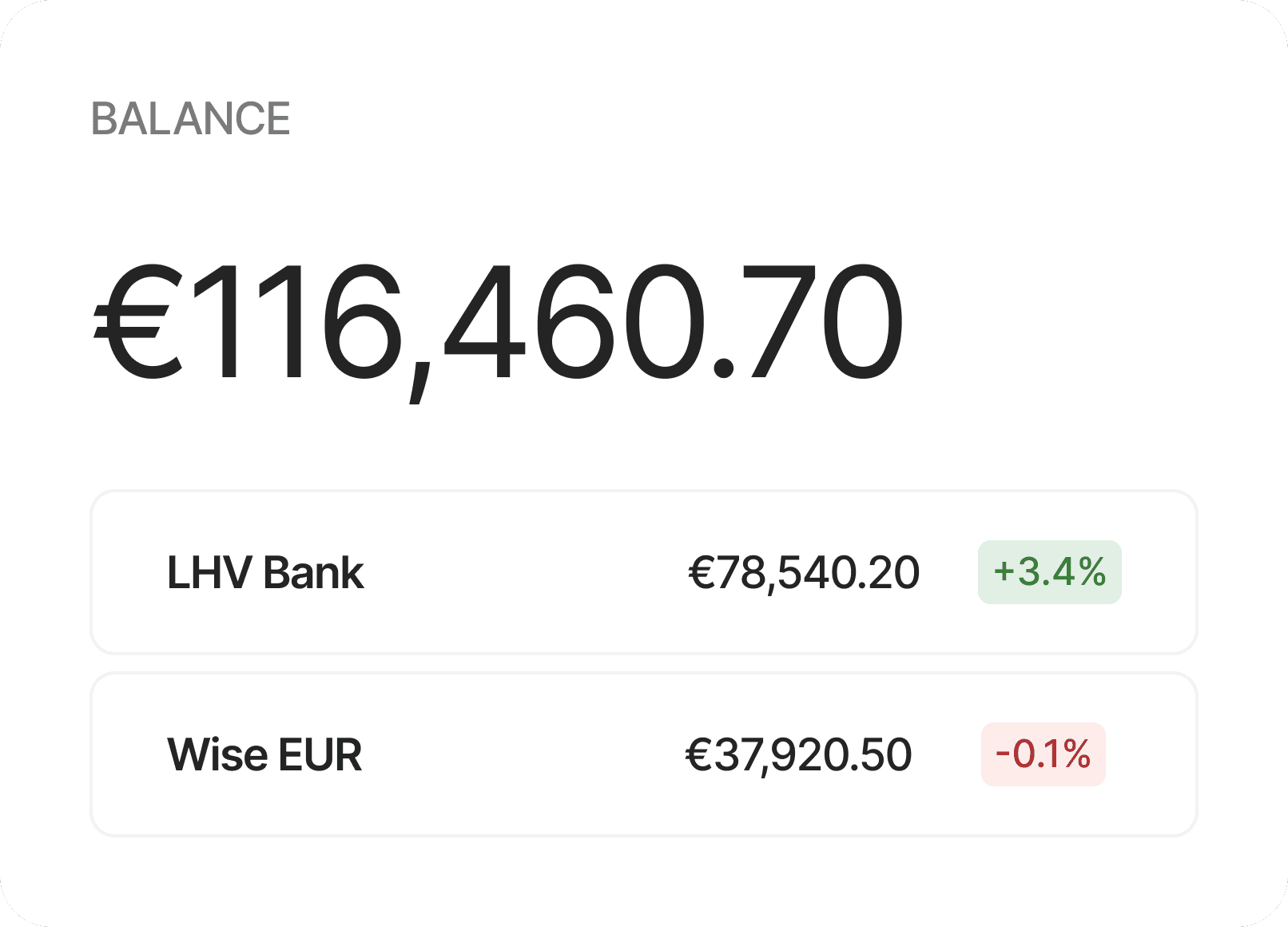
Join the founders who have automated their financial reporting. Connect your first bank account in 90 seconds and see your real-time runway instantly.
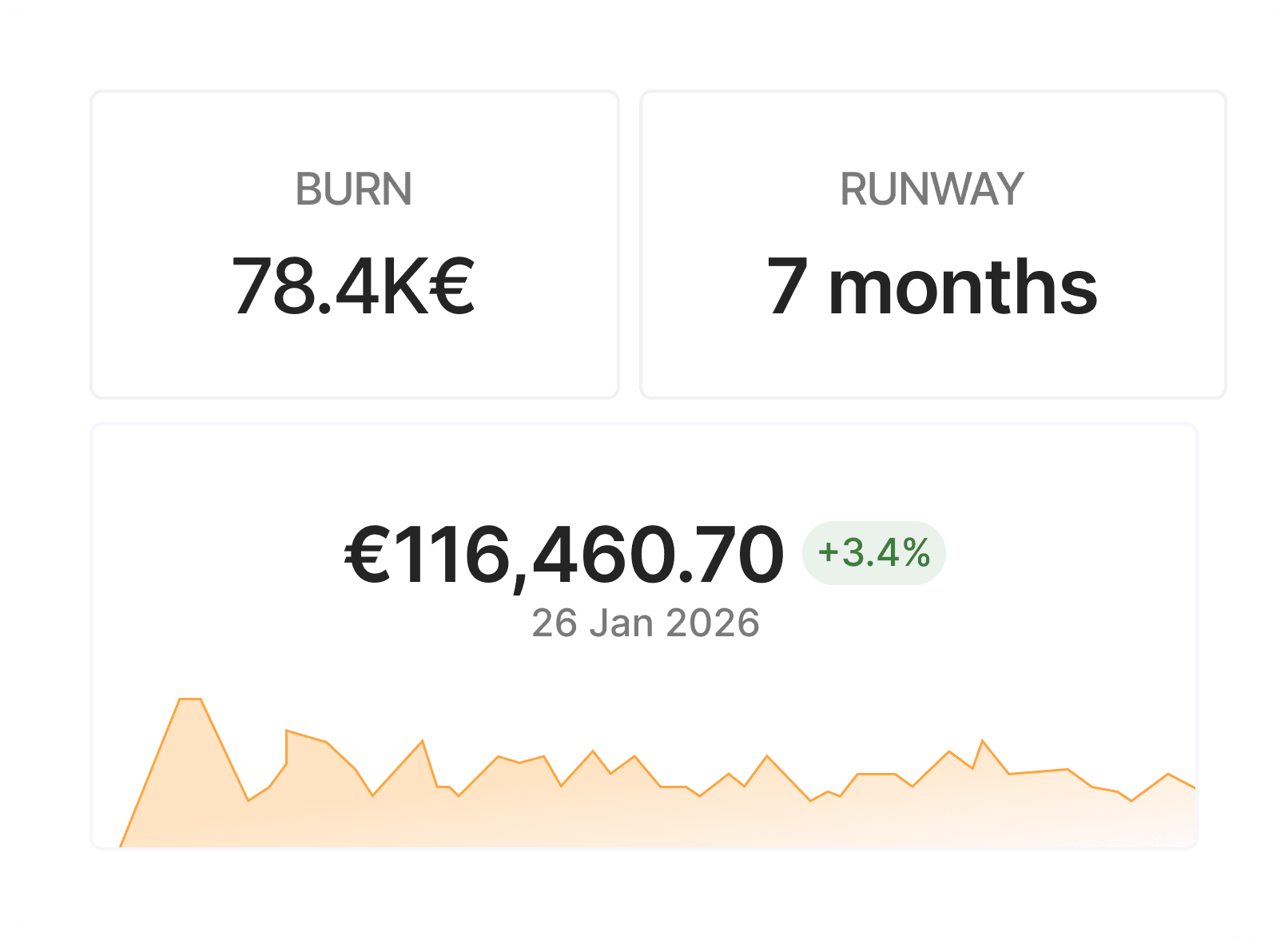
Stop managing your startup in a spreadsheet
Join the founders who have automated their financial reporting. Connect your first bank account in 90 seconds and see your real-time runway instantly.
Stop managing your startup in a spreadsheet
Join the founders who have automated their financial reporting. Connect your first bank account in 90 seconds and see your real-time runway instantly.